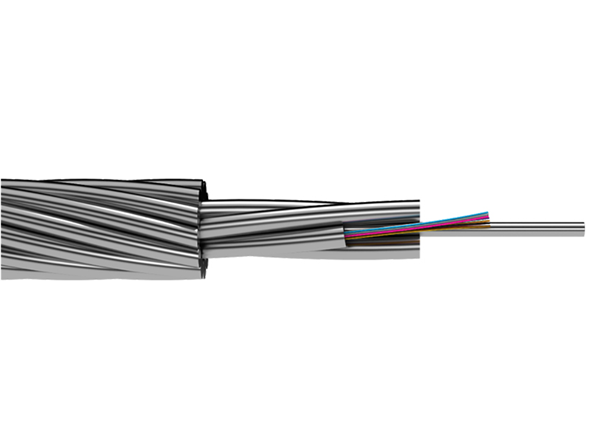
The key feature of this type is "stranded" (twisted/stranded). The optical fiber unit is not located in the center of the cable, but rather serves as one of the stranding elements, twisted together with other conductive wires.
✔ Optical Fiber Placement: Optical fibers are housed within stainless steel loose tubes, and these tubes are helically stranded within the cable structure. The interior of the loose tubes typically contains water-blocking gel, and the optical fibers have excess length to buffer against external forces.
✔ Mechanical Characteristics: Due to the stranding design, the cable contains more gaps, making it more flexible and crush resistant. Its "zero fiber strain" margin (the maximum tension at which optical fibers remain unstressed) is typically high (≥80% RBS), providing excellent protection for the optical fibers.
✔ Trade-offs: Compared to central tube designs, the stranded type may have slightly lower mechanical and electrical efficiency, with more gaps in the structure, and the stainless steel tubes require more complex preparation during splicing.
Application
As a type of OPGW, its fundamental use is to serve simultaneously as an overhead ground wire for power transmission lines (providing lightning protection and fault current shunting) and as a communication medium. The stranded OPGW (S) is commonly found in scenarios with high requirements for cable flexibility and long-span installation.
Product Structure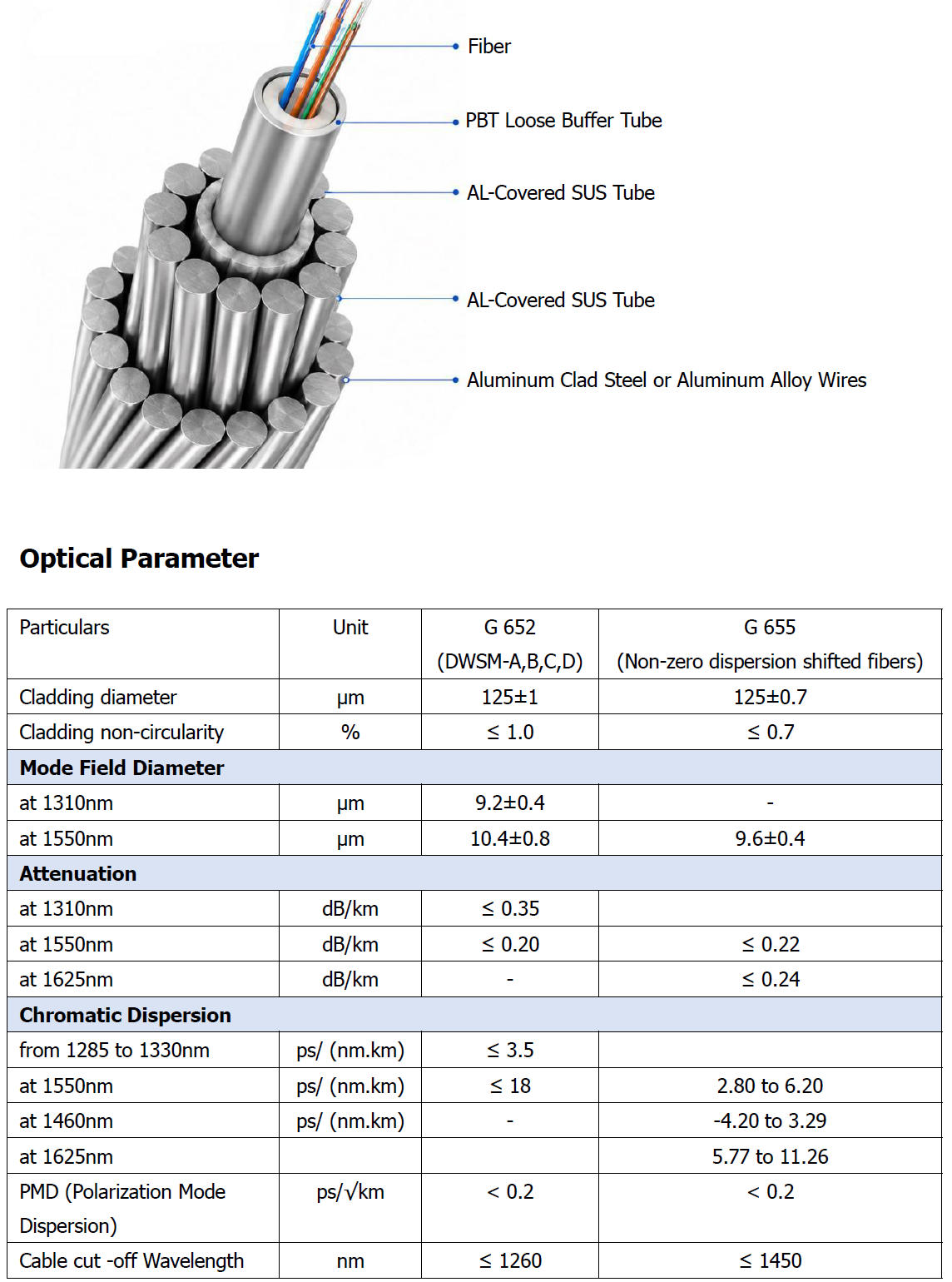
Product installation site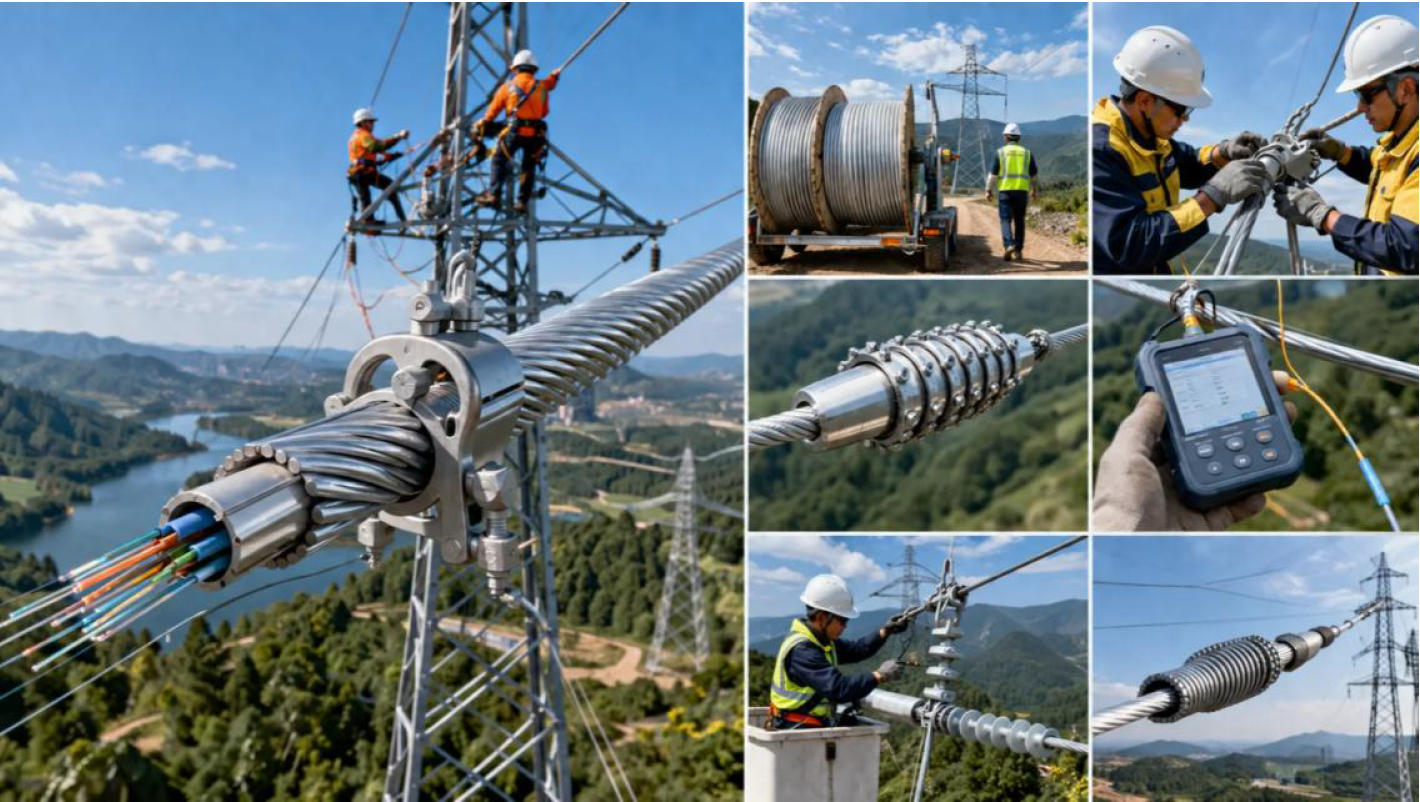
 No.1103, 52th Xiangshi Rd, Dingfeng Building, Liaobu Town, Dongguan City, China 523419